How Did Bad Bunny Redefine Pop?
Key points
Bad Bunny revolutionized music by defying genres and labels, using Spanish-language reggaeton and trap to achieve global dominance without compromise, all while centering Puerto Rican culture and identity.
Key takeaway
Bad Bunny's journey from a shy supermarket employee in Puerto Rico to the world's most streamed artist demonstrates the power of cultural authenticity and artistic audacity. By refusing industry norms, singing exclusively in Spanish, and blending genres like reggaeton, trap, pop, and rock, he transformed Latin music into a global force. Each album, from the surprise release of "X 100pre" (2018) to the politically charged "nadie sabe lo que va a pasar mañana" (2023) and the nostalgic "dónde están los pasos" (2025), serves as a manifesto for Puerto Rican identity, resistance, and creative freedom. His success proves that uncompromising personal vision can resonate universally, challenging the very architecture of the pop music industry.
How did a shy kid from Puerto Rico become the most streamed artist in the world? Bad Bunny didn't follow the rules; he blew them up. He redefined reggaeton, rewrote pop's codes, and put Puerto Rico on top. This is his story, one of rage, resistance, and above all, freedom.
Before billions of streams, there was Benito Antonio Martínez Ocasio, born March 10, 1994, in San Juan. Growing up in Vega Baja in a modest family, he was a reserved dreamer. By age 5, he wanted to be a singer. His first musical school was the church choir, where he sang until 13. Then, he discovered reggaeton, a genre born in the 80s in Panama but perfected in Puerto Rico, merging dancehall with hip-hop. It was a voice for the working class, with iconic figures like Daddy Yankee. In 2004, Daddy Yankee's "Gasolina" exploded internationally, making Puerto Rico reggaeton's epicenter.
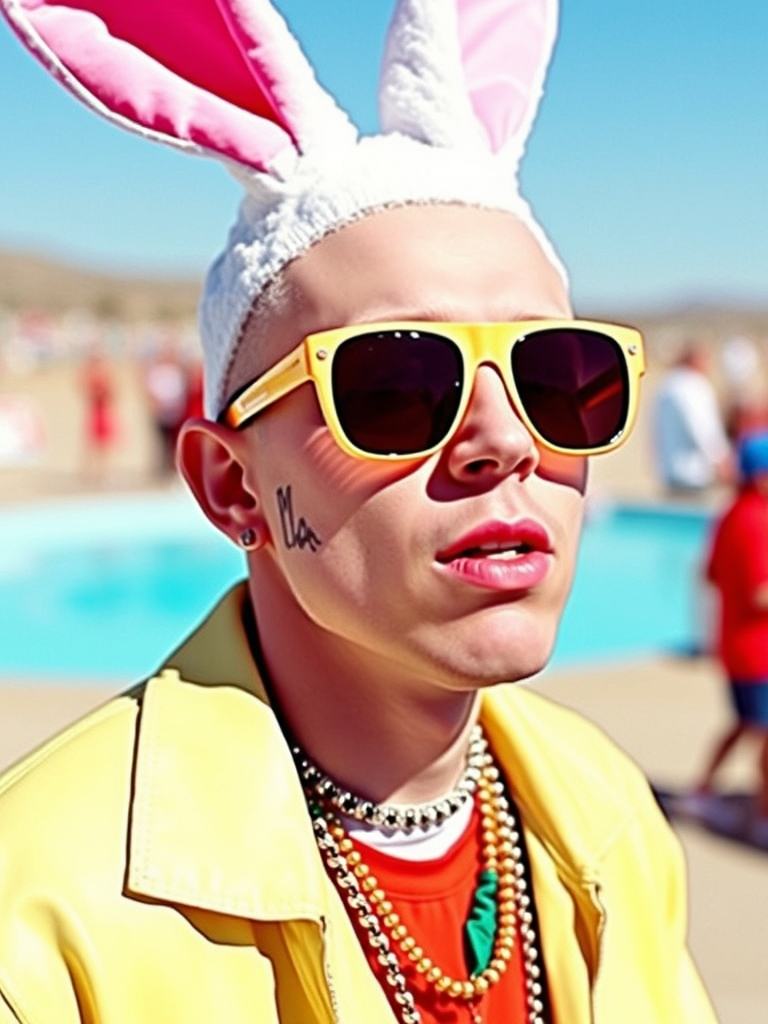
Young Benito had a ritual: at 7:50 a.m. on the school bus, the radio played hits. He didn't just listen; he started creating. Using a pirated version of Fruity Loops, he composed in his room, selling beats on USB keys. He developed a unique, audacious style, mixing his and his mother's clothes. A school photo of him in a bunny costume earned him the nickname "Bad Bunny," which he kept.
After high school, he studied communications at the University of Puerto Rico while bagging groceries at a supermarket. He posted tracks on SoundCloud without promotion. One evening, he uploaded "Diles." It gained over a million listens in a week. DJ Luian, a key reggaeton figure, discovered it and contacted him. At 22, Bad Bunny signed with Hear This Music, quit his job, and entered the arena.
Hits came rapidly: the "Diles" remix with Nengo Flow and Arcángel, "Soy Peor," and "Sensualidad" with J Balvin and Prince Royce. Before an album, he had hits like "Chambea" and "Estamos Bien," the latter a post-Hurricane Maria resilience anthem performed on The Tonight Show Starring Jimmy Fallon. Then came "I Like It" with Cardi B and J Balvin, reaching the Billboard Hot 100 and introducing him to English-speaking audiences.
His label wanted only profitable singles, not a long-term vision. Frustrated, Bad Bunny left. He signed with Noah Assad at Rimas Music and on December 24, 2018, surprise-released "X 100pre" via Instagram Live. It was a radical, genre-blending project mixing Latin trap, reggaeton, pop, rock, and house. It debuted at number 1 on Latin charts and number 29 on the Billboard 200, climbing to number 11. "Estamos Bien" was its first single. "Mía" with Drake became a massive hit, reaching number 5 on the Hot 100. "Solo de Mí" addressed domestic violence from a woman's perspective, showcasing his challenge to reggaeton's sexism. "Caro" featured Ricky Martin and played with gender norms. Critically acclaimed, "X 100pre" scored 84 on Metacritic. Rolling Stone ranked it number 447 on its 500 Greatest Albums list. It was a declaration of independence.
The Rise to Dominance
In 2019, he and J Balvin released the collaborative album "OASIS" on June 28. Recorded in a week, its 8 tracks spanned 27 minutes. It debuted at number 1 on Top Latin Albums and number 9 on the Billboard 200. Billboard ranked it a top 10 album of 2019.
On February 29, 2020, he released "YHLQMDLG" (Yo Hago Lo Que Me Da La Gana). It became the highest-charting Spanish-language album in Billboard 200 history, debuting at number 2 with 179,000 units sold. It garnered over 200 million U.S. streams in 7 days. It was Spotify's most-streamed album globally in 2020 with 3.3 billion streams. It won Best Latin Album at the Grammys. Tracks like "Ignorantes," "La Difícil," and the symphonic "Safaera" went viral. "Yo Perreo Sola" became an LGBTQ+ anthem, with Bad Bunny in drag in the video. The album was a critical triumph, redefining reggaeton's standards.
In May 2020, during lockdown, he surprise-released "Las Que No Iban a Salir," compiling unreleased demos. That week, he had three albums in the Latin top 3. It was a raw, unfiltered look into his process.
In November 2020, he released "El Último Tour Del Mundo." It became the first all-Spanish album to reach number 1 on the Billboard 200. It featured Rosalía on "La Noche de Anoche," which had 22.2 million U.S. streams in a week. The album earned a Latin Grammy and a Grammy.
Global Superstardom and Legacy
On May 6, 2022, he released "Un Verano Sin Ti." With 23 tracks, it spent 13 non-consecutive weeks at number 1 on the Billboard 200. It was the world's most-streamed album on Spotify in 2022, with over 10 billion streams. It was the first Spanish-language album nominated for the Grammy Album of the Year. It blended celebration and political critique, with songs like "El Apagón" protesting privatization. "Tití Me Preguntó" became a global hit.
In October 2023, he released "nadie sabe lo que va a pasar mañana," a darker, trap-heavy project reflecting on fame's isolation. It debuted at number 1 on the Billboard 200.
In 2025, he released "dónde están los pasos," a nostalgic, politically deep return to Puerto Rican roots, blending salsa, plena, and bolero. It served as a love letter and tool of resistance for the island.
Bad Bunny's career is built on sincerity over conformity. He became a global phenomenon without singing in English, proving that anchoring art in personal and cultural truth is a universally powerful formula.
Frequently Asked Questions
Qany questions?
Please read the article carefully. If you have any questions, please contact [email protected].
Audio synthesized by Entity-Echo AI Agent