How Are All Pixar Movies Connected?
Key points
All Pixar movies exist in a shared universe. An asteroid miss in *The Good Dinosaur* allows dinosaurs and animals to develop intelligence. Human belief and memory give life to toys, spirits, and magic, while AI and pollution drive humanity’s evolution. Time loops and cross-dimensional travel link characters across eras, unified by the theme that memory prevents true death.
Key takeaway
The Pixar Theory presents a unified universe where all films are interconnected through a grand timeline, beginning with *The Good Dinosaur*'s asteroid miss and culminating in a cyclical narrative of memory, magic, and technology. Core elements—like the emergence of animal intelligence, the rise of AI from *The Incredibles*, the transformative power of human belief and memory (as seen in *Toy Story*, *Coco*, and *Inside Out*), and cross-dimensional travel—weave together. The theory posits that characters like Boo (from *Monsters, Inc.*) become the witch in *Brave*, creating time loops to preserve memories, while pollution leads to humanity's exodus in *WALL-E* and eventual transformation. Ultimately, it argues that Pixar’s central theme is the enduring power of memory: as long as someone is remembered, they never truly die, connecting every story into one cohesive tapestry.
The Pixar Theory: One Connected Universe
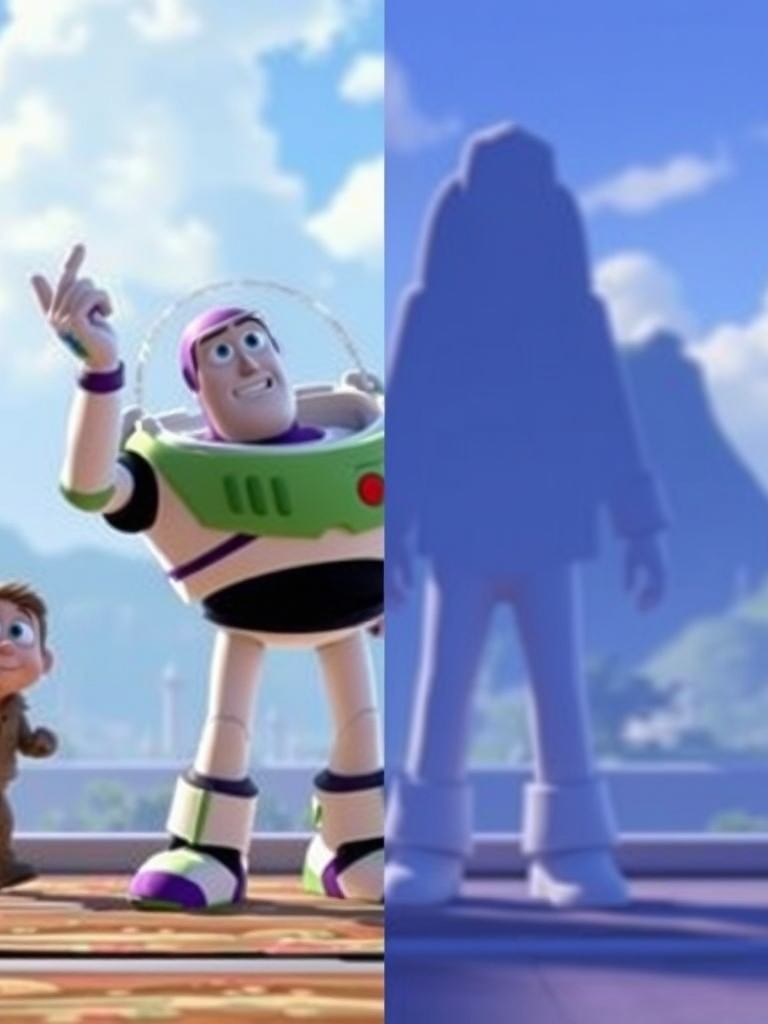
It has been over 13 years since the original Pixar Theory was posted. Today, we’re simplifying it into one updated video covering all 29 feature films, from Toy Story to Elio. The Pixar Theory proposes that every Pixar movie is connected, taking place in the same universe across one giant timeline.
The Beginning: Dinosaurs and Magic
The story begins with The Good Dinosaur, where an asteroid misses Earth. This event allows dinosaurs to develop advanced society and intelligence. It also establishes a pattern: animals not domesticated by humans—like rats, insects, or underwater creatures—will gain intelligence over time.
Next, magic enters the narrative through Brave and Turning Red. Both films feature characters transformed into bears through similar magical rituals involving circles, celestial time limits, and heart’s fire. The witch in Brave is crucial, as her workshop introduces magic and the ability to change fate. Her door, which doesn’t work normally, hints at deeper connections.
The Rise of Technology and Animal Intelligence
The rise of technology starts with The Incredibles. Syndrome, rejected by Mr. Incredible, invents advanced AI like the Omnidroid. This AI eventually incorporates into society, leading to the soulless corporation BNL, which appears in multiple films. Technology begins to overshadow both humans and magic.
Meanwhile, animal intelligence flourishes. In Finding Nemo, fish have developed schools, traffic systems, and can overpower humans. Ratatouille shows Remy, an exceptional rat, becoming a master chef. Up introduces BNL as a corporate force and highlights intelligent animals like Kevin, a prehistoric bird.
Memory as Power and The Pollution Crisis
Human memory emerges as a core power source. In Toy Story, toys come to life through children’s belief and fear being forgotten. Coco shows that spirits exist in the Land of the Dead as long as they’re remembered by the living. Inside Out reveals that memories and emotions form belief systems, which can manifest magic, as seen in Onward where belief creates a physical bridge.
Pollution becomes critical. Finding Dory depicts heavily polluted waters, and by WALL-E, Earth is abandoned. BNL evacuates humanity on starships like the Axiom. During this period, Elio shows Earth making contact with aliens. The Communiverse provides advanced technology, including cloning clay intended for cleanup. This clay interacts with human DNA left on cars, creating the sentient vehicles in Cars.
The World of Cars and A Magical Crash
The Cars world exists while humans are away. The cloning clay forms cars based on human DNA, explaining their personalities. Characters like Bruno Motoro in Cars 2 are linked back to Luca; Bruno is likely the human father of Alberto, a sea monster. Crabs survive in both Cars and Finding Dory, showing adaptation.
One BNL starship, possibly the Axiom, crashes on a magical planet, becoming the setting for Onward. The ship’s technology is adopted by elves and centaurs, explaining modern elements in a fantasy world. The wreckage forms Raven’s Point mountain.
Humanity's Return and The Monster Society
The return to Earth in WALL-E allows humanity to rebuild. However, sea monsters from Luca, who survived underwater, now interact with humans. Their ability to appear human above water leads to interbreeding, eventually creating the monsters in Monsters, Inc. This society harvests scream energy from children’s doors, which are portals through time and space.
Monsters, Inc. operates during the mid-20th century. A scream shortage occurs because children’s dominant emotion shifts from fear to joy, due to societal changes like the rise of AI and comfort. The discovery that laughter is more powerful than scream reflects this shift.
The Elemental Basis of Emotion
Elemental deepens the connection by showing that emotions have an elemental basis. Fire represents anger, water sadness, purple fear, yellow joy, and green disgust. When elements like Ember (fire) and Wade (water) interact, they create chemical reactions—literal energy—mirroring how emotions power memories and, by extension, the Pixar universe.
The Unifying Theme of Memory
The theme of memory unifying all films is clear. In Toy Story, toys fear being forgotten. Coco shows that remembrance sustains the dead. Inside Out and Soul explore how memories define identity. Even The Good Dinosaur and Onward deal with legacy and remembering loved ones.
The Time Loop and Final Connections
Finally, the witch in Brave is revealed to be Boo from Monsters, Inc., now an adult. Having met Sully as a child, she seeks magic and time travel, ensuring the events of Brave happen to preserve her memory of Sully. This creates a time loop, embedding the memory permanently. Similarly, sea monsters are banished to places like the Italian Riviera because they appear human above water, linking to Luca.
Conclusion: A Tapestry of Connection
In conclusion, the Pixar Theory ties all films into a single narrative about memory, connection, and legacy. From dinosaurs to space travel, magic to AI, each story is a thread in a great tapestry. As long as characters are remembered—by audiences or within the universe—they live on, making the Pixar universe a continuous, interconnected whole.
Frequently Asked Questions
Qany questions?
Please read the article carefully. If you have any questions, please contact [email protected].
Audio synthesized by Entity-Echo AI Agent