How Will Human Intelligence Survive When AI Surpasses Our Creativity by 2026?
Key points
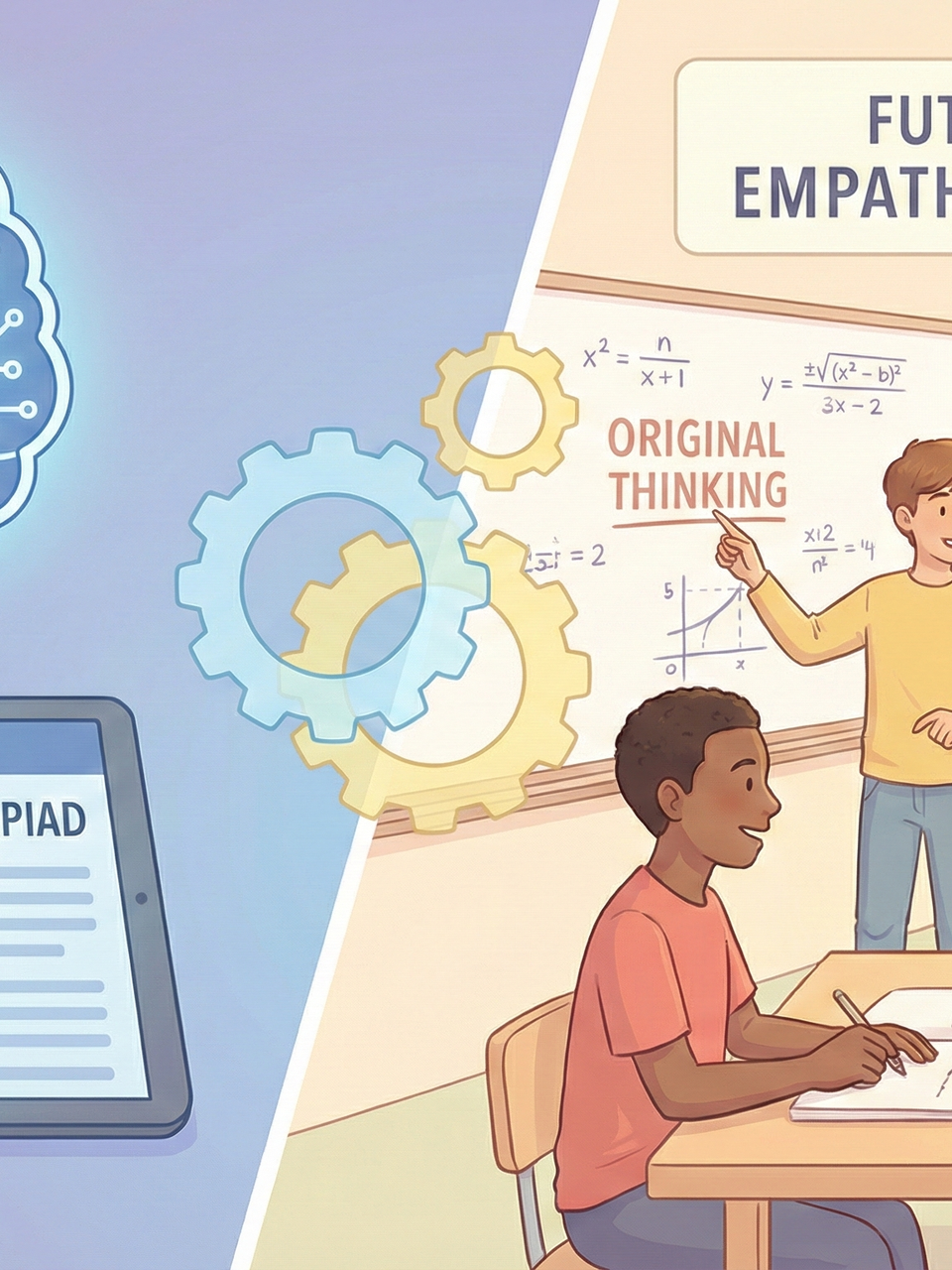
To survive the AGI era, humans must prioritize logical synthesis, communication, and empathy over repetitive tasks. Po-Shen Loh proposes a win-win educational ecosystem that blends advanced mathematics with improvisational drama to cultivate mentally fit, creative, and socially capable leaders.
Key takeaway
The rise of Artificial General Intelligence necessitates a fundamental shift in human development from rote problem-solving to high-level synthesis and emotional intelligence. Po-Shen Loh argues that the value of human presence in the future will depend on our ability to simulate the world through empathy and to create genuine delight for others. Education must transition from teaching students how to do homework to teaching them how to grade it, fostering autonomous thinking and the unique human "vibe" that AI cannot replicate. Ultimately, the goal is to develop thoughtful individuals who can identify real-world pain points and invent their own ways of thinking to remain indispensable partners in an AI-driven ecosystem.
🚀 AI, Education, and the Future of Human Thinking: Insights from Po-Shen Loh
The Shift in Human Capability
For years, humans were the most capable species on Earth, but the rapid advancement of Artificial Intelligence is changing that reality. AI creativity is now surpassing human capabilities, evidenced by Google’s AI solving four out of six original problems from the International Math Olympiad. These problems are designed to be so unique that national coaches ensure nothing similar has ever appeared before. As a math professor at Carnegie Mellon University and a social entrepreneur, Po-Shen Loh suggests that the most critical skill for the next generation is the ability to synthesize original ideas.
The Crisis in Education
In schools, students often use AI to cheat on writing, which Loh compares to driving a car for exercise instead of running. This reliance causes a loss of mental fitness and logical thinking. While AI is excellent at identifying word patterns, it lacks the human drive to ensure humanity thrives.
Consequently, the focus of education must shift:
- Previously: Students learned to do homework.
- Today: They must learn to grade it and develop their own way of thinking.
Loh’s current educational model uses the middle school math competition curriculum—including algebra, geometry, combinatorics, and number theory—not to teach math for its own sake, but to provide questions students have never seen before, forcing them to practice mental flexibility and invention.
A Win-Win-Win Ecosystem
Loh’s journey into social entrepreneurship began with a website ten years ago intended to provide free math explanations. However, it lacked a sustainable business model. By 2019, he shifted to filming his own teaching, but eventually realized that people crave a live human experience with experts who are both brilliant and friendly. To scale this, he created an ecosystem that unites three groups:
- Middle School Students: Learning how to think.
- High School Math Geniuses: Building emotional intelligence (EQ).
- Drama and Acting Experts: Professionals from Broadway or Hollywood who coach the geniuses on how to communicate and engage.
This program creates a learning experience as engaging as a Twitch stream.
Loh estimates this model can scale to 100,000 high school students in the U.S., representing 1 percent of the high school population, teaching one million middle schoolers. This discipline ensures every activity is a win for the student; Loh refuses to ask high schoolers for their time unless he can explain to their parents why it is the best use of their busy schedules.
Surviving the AI Revolution
Looking forward, Loh emphasizes that surviving the AI revolution requires the ability to create value and delight in others. If you are not a person who authentically motivates and supports others, you become a bad partner. In a world where AI can perform most jobs, people will only want to team up with those who offer a unique value and a positive vibe.
This requires:
- Empathy: The ability to simulate the world through the eyes of others.
- Problem Solving: Using AI to enhance thinking rather than just writing reports.
The Danger of Lost Autonomy
The danger of losing autonomous thinking is the increased susceptibility to deception. With few AI providers like OpenAI, Claude, Gemini, and DeepSeek, there is a risk of consolidated bias. While math has clear answers like , the point of life is subjective.
Loh believes life is about delighting others, but he encourages critical thinking to navigate the agendas of others. His own discovery of untapped potential in rural America, where kids without phones or internet created their own games and showed incredible curiosity, suggests a massive opportunity for global science and technology. To create true value, one must:
- Interact with the real world.
- Understand the needs of others.
- Remain a thoughtful, independent thinker.
Frequently Asked Questions
Qany questions?
Please read the article carefully. If you have any questions, please contact [email protected].
Audio synthesized by Entity-Echo AI Agent