How to Watch Lunar Eclipses Globally?
Key points
A global live stream captured a total lunar eclipse, explaining the red moon phenomenon and featuring NASA's Artemis moon mission plans, with expert interviews from multiple continents.
Key takeaway
This live broadcast detailed the global observation of a total lunar eclipse, featuring expert insights from locations worldwide, including California, Hawaii, New Mexico, and Australia. Key discussions explained the scientific phenomenon behind the moon's red hue during totality—caused by Rayleigh scattering of sunlight through Earth's atmosphere—and highlighted upcoming celestial events. The broadcast also covered NASA's Artemis program, emphasizing the planned return of astronauts to the moon by 2028 and the scientific objectives of lunar missions. The event underscored the importance of international collaboration in astronomy and public engagement with space science.
Welcome to Tonight's Total Lunar Eclipse
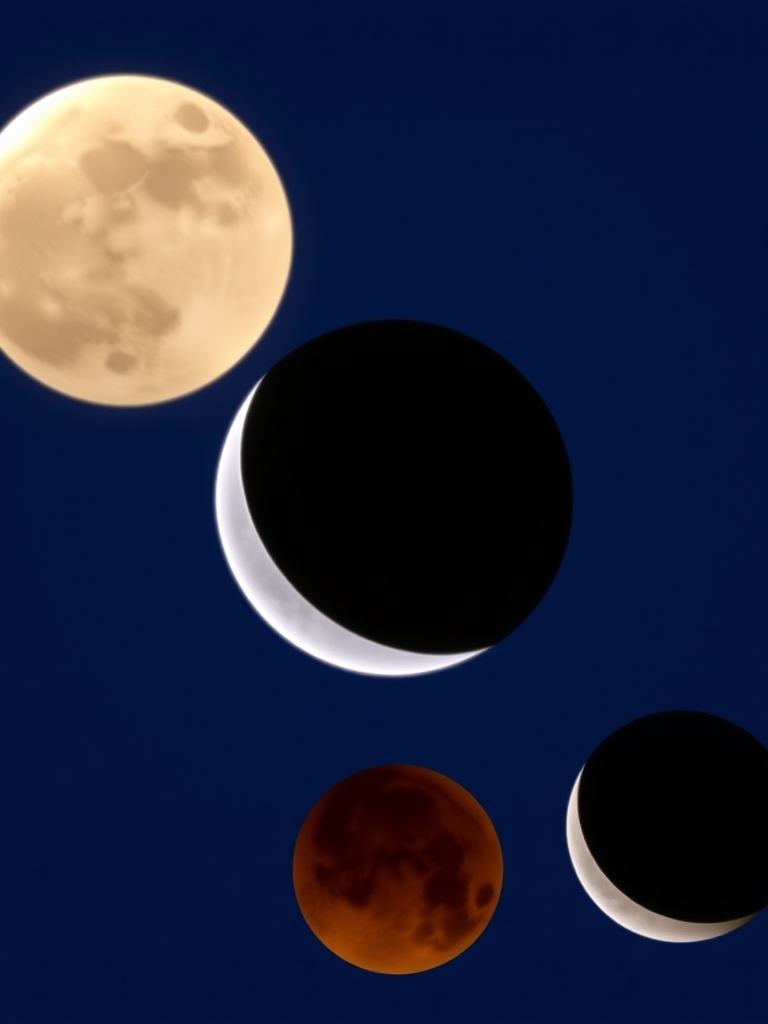
Welcome to tonight's total lunar eclipse on timeanddate.com. I'm Anna Buckle, with Graeme Jones, for four hours of coverage. We have telescopes in California, New Mexico, Hawaii, and Western Australia. A lunar eclipse occurs when the sun, Earth, and moon align, with the moon passing through Earth's shadow. This means it's a full moon, visible only from the nighttime side of Earth. We're broadcasting from Stavanger, Norway, at 10:30 AM local time, so we're on the daytime side. To see who can view the eclipse, we use a moonlight map showing where the moon is above the horizon. Currently, that includes the Pacific Ocean, North and South America, eastern Asia, and Australia. The moon is directly overhead near Hawaii, where it's around midnight. Over the next four hours, Earth's rotation will shift this visibility area.
Live Broadcast Feeds
We have feeds from four locations: the timeanddate mobile observatory in California with Stefan Thorsson and Constantine Boss; John Williams in Santa Fe, New Mexico; Priya Krishnamurthy and Avinash Surendran in Waimea, Hawaii; and Matt Woods and Roger Groom in Perth, Australia. In Perth, the moon will rise in about an hour. The eclipse has already started with the penumbral phase, where the moon enters the lighter outer part of Earth's shadow. The partial phase begins in about 15 minutes, as the moon moves into the darker inner shadow. Totality starts at approximately 11:04 UTC, lasting just under an hour, during which the moon turns a blood red color. The second partial phase begins around 12 UTC as the moon exits the dark shadow.
The Science of the Blood Moon
Why does the moon turn red? We discussed this with Priya and Avinash in Hawaii. They explained that during a lunar eclipse, if you were on the moon, you'd see Earth eclipsing the sun. Earth's atmosphere refracts sunlight, filtering out blue light and allowing red light to illuminate the moon, similar to a sunset. This effect, caused by Rayleigh scattering, creates the blood moon appearance. The exact hue can vary based on atmospheric conditions.
Insights from NASA's Artemis Program
We also spoke with Dr. Noah Petro from NASA's Artemis program. He discussed the upcoming Artemis missions: Artemis 2, a crewed flyby of the moon possibly in April; Artemis 3, a test flight in low Earth orbit in 2027; and Artemis 4, aiming to land astronauts on the moon in 2028. Dr. Petro emphasized the importance of these missions for science and public inspiration, noting that Artemis 4 will focus on collecting lunar samples and testing systems for future exploration. He highlighted that by the next total lunar eclipse in December 2028, NASA may have landed two missions on the moon.
Eclipse Progression and Conclusion
During totality, we enjoyed views from multiple locations, including Dunedin, New Zealand, where observers are preparing for a total solar eclipse in 2028. We discussed equipment used for streaming, such as 6-inch and 3-inch telescopes, and noted the challenges of weather and travel. The eclipse concluded with a partial phase ending around 45 minutes after totality, followed by moonset in California at approximately 13:57 UTC.
Future Celestial Events
This was the last total lunar eclipse for almost three years, with the next deep partial lunar eclipse on August 27-28, covering 96% of the moon. The next total lunar eclipse will be on December 31, 2028, visible in some time zones as a New Year's event. Upcoming solar eclipses include a total solar eclipse in Spain on August 12, 2024, another in Spain and North Africa on August 2, 2027, and one over Australia and New Zealand on July 22, 2028. On average, a total solar eclipse occurs at any given location every 373 years, while partial solar eclipses happen about every 2 years and 7 months.
Acknowledgments and Closing
We thanked all contributors, including John Williams, Priya Krishnamurthy, Avinash Surendran, Matt Woods, Roger Groom, Stefan Thorsson, Constantine Boss, and the Dunedin Astronomical Society. The broadcast emphasized the value of global collaboration in astronomy and encouraged public engagement with celestial events. Don't forget to subscribe for future coverage, including the total solar eclipse in Spain on August 12, 2024.
Frequently Asked Questions
Qany questions?
Please read the article carefully. If you have any questions, please contact [email protected].
Audio synthesized by Entity-Echo AI Agent