Why Lunar New Year Unites Billions
Key points
Lunar New Year, celebrated by 1.5+ billion people across 16+ countries, features ancient traditions, massive global migrations, and modern digital records, uniting cultures worldwide.
Key takeaway
The Lunar New Year stands as a profound cultural and social phenomenon, uniting over 1.5 billion people globally. Its traditions, from zodiac cycles and legendary origins to massive migrations exceeding 3 billion trips and record-breaking 19 billion text messages, demonstrate a unique blend of ancient heritage and modern scale. This celebration not only reinforces cultural identity across diasporas but also showcases humanity's capacity for shared ritual and joy, transcending geographical boundaries through fireworks, family reunions, and symbolic foods like dumplings and noodles.
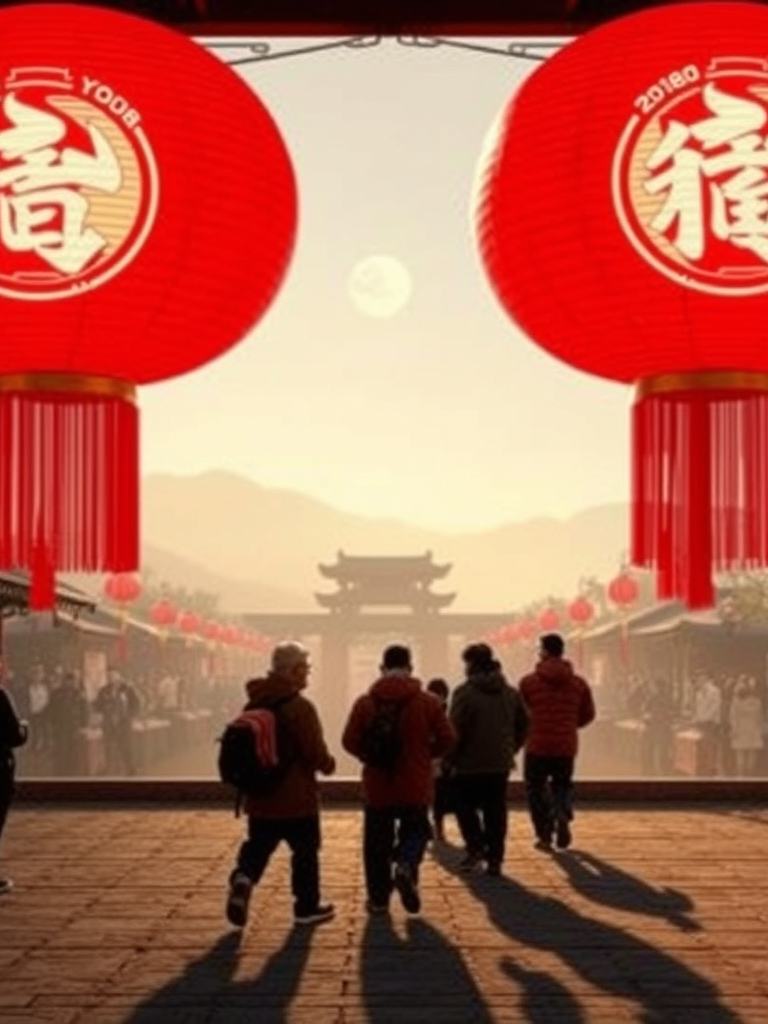
Across Asia, the Lunar New Year is one of the most widely observed holidays globally, celebrated by over 1.5 billion people, which is more than 16 percent of the world's population. Sixteen countries mark this festival with public holidays, primarily in Southeast Asia, though it is also observed in places like Suriname in South America. The Lunar New Year begins at sunset on the day of the second new moon after the winter solstice, meaning it can occur anytime from January 21 to February 21. The celebration period concludes 15 days later with the Lantern Festival, coinciding with the first full moon.
According to legend, the holiday originated from villagers defeating Nian, a fierce dragon that preyed on livestock and children. This victory evolved into an annual celebration, with records tracing back to the Shang dynasty in the 14th century. Each year is associated with one of the 12 animals in the Chinese zodiac, based on the folktale of the Great Race. The order in which the animals finished the race determines the yearly sequence. For instance, the rat won by riding on the ox's back and jumping off at the last moment, securing first place, while the ox came second. The year 2026 will be the Year of the Horse, the seventh animal in the cycle.
Festivities include fireworks, parades, and performances, contributing to the world's largest annual migration known as the Spring Festival travel rush. This event sees over 3 billion trips taken each year. Celebrations occur worldwide, from long-established Chinese communities in Southeast Asia to newer Chinatowns in cities like Sydney, London, Vancouver, and Los Angeles, where parades and lion dances attract large crowds.
Traditions hold that Nian emerges on New Year's Eve but is scared away by red decorations, banners, and firecrackers. On New Year's Day, children are not punished for misbehavior, as crying on this day is believed to lead to crying throughout the year. Children also receive red envelopes containing money as gifts. Notably, the world record for most text messages sent in a day is broken annually during Chinese New Year, with the current record at 19 billion.
Food plays a symbolic role: dumplings represent happiness and prosperity, fortune cookies are enjoyed for glimpses into the future, and noodles eaten on the second day symbolize longevity. In essence, the Lunar New Year is a time of unity, reflection, and hope, encapsulated in the greeting "Gong Xi Fa Cai."
Frequently Asked Questions
Qany questions?
Please read the article carefully. If you have any questions, please contact [email protected].
Audio synthesized by Entity-Echo AI Agent