How M5 MacBook Pro Dominates
Key points
The M5 MacBook Pro delivers unmatched CPU performance, a brilliant 1600-nit display, and exceptional battery life, but gaming and repairability are limited.
Key takeaway
The M5 MacBook Pro sets a new benchmark for laptop performance, particularly in single-threaded tasks where it outperforms leading AMD and Intel chips by 61% and 75.4% respectively. Its 1600-nit display, exceptional battery life of over 17 hours, and superior build quality justify its position as a premium device. However, gaming performance remains limited due to poor optimization for macOS, and the controversial notch design persists. While repairability is low and upgrade options are restricted, Apple's customer service experience is outstanding. For professionals prioritizing display quality, performance, and battery life, the M5 MacBook Pro is a compelling choice, though the MacBook Air offers a more affordable alternative with some trade-offs.
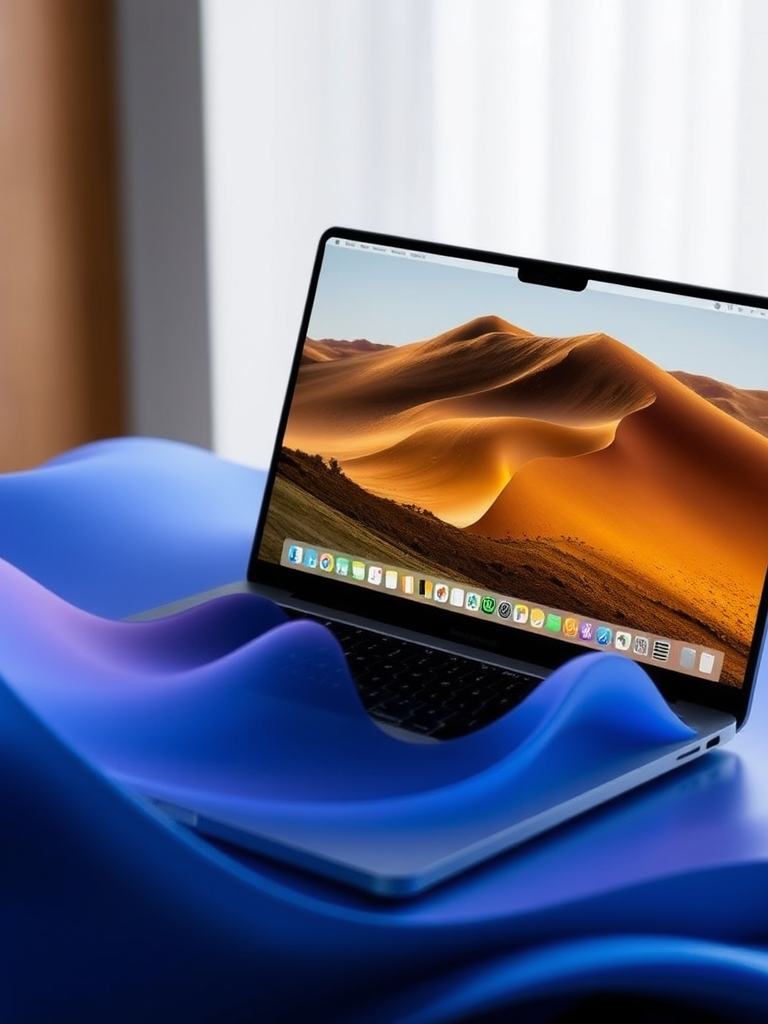
The new M5 MacBook Pro has arrived, building on the already impressive M4 model. While externally identical to its predecessor, the internal upgrades are significant. The laptop features a 14-inch CNC aluminum chassis weighing 3.4 lbs, known for its exceptional build quality with minimal flex.
For connectivity, it includes three Thunderbolt 4 ports, a full-size SD card reader, HDMI 2.1, MagSafe, and a 3.5 mm headphone jack. Thunderbolt 4 is sufficient for most users, as Thunderbolt 5 offers limited practical benefits currently.
The display remains a standout with a resolution of 3,024 by 1,968 pixels and a peak brightness of 1600 nits, making it usable even in direct sunlight. It supports 120 Hz ProMotion refresh rates, though variable refresh rate functionality is limited compared to technologies like G-Sync. An optional nano-texture coating is available for $150 to reduce reflections.
At the heart is the new M5 chip, featuring four performance cores and six efficiency cores, with a maximum boost speed of 4.6 GHz. Apple claims the CPU is 15% faster than the M4, and testing confirms a 15.6% improvement. Compared to the Intel Core Ultra 7268V in the HP EliteBook X, the M5 shows a 61% performance gain. Against AMD's Ryzen 9 HX370, single-threaded performance increases by 75.4%. Multi-threaded performance is also strong, supported by an increase in L2 cache from 4 MB in the M4 to 6 MB in the M5.
Memory bandwidth has increased by 27.5%, benefiting both CPU and GPU performance. Apple states the GPU is 30% faster, with testing showing a 28.5% improvement. However, gaming performance does not fully leverage this power due to poor optimization for macOS. In synthetic benchmarks like Geekbench, the M5's GPU is 55% faster than the Intel Arc 140V, but real-world game performance is similar. Compared to dedicated GPUs like the RTX 4070 mobile, the M5 can be over 400% slower.
Storage speeds have improved with a shift to a PCIe 5.0 controller. Apple advertises SSD speeds of 5,100 MB/s, compared to 3,100 MB/s on the M4, though tests show speeds reaching up to 6,300 MB/s on a fresh drive.
The keyboard is consistent and fast for short bursts but may cause fatigue during prolonged typing sessions. The trackpad is best-in-class, with excellent force touch and seamless integration with macOS gestures. The speaker system, with six speakers and force-cancelling woofers, sets the market benchmark for audio quality.
The webcam is a 12-megapixel Center Stage camera capable of recording 1080p video, accompanied by a three-mic array. The much-discussed notch remains a polarizing design element.
Repairability is low, with a custom pentalobe screw head (P5) securing the case. Internal components like RAM and storage are soldered and not user-upgradeable. However, Apple's customer service is highly praised for efficient warranty repairs, as demonstrated by a next-day screen replacement experience.
Battery capacity is 72.4 Wh, delivering 17 hours and 22 minutes in testing, only four minutes more than the M4 model. The efficient 17-watt processor ensures consistent performance whether plugged in or on battery.
The base M5 MacBook Pro is priced at $1,600. While the MacBook Air is a cheaper alternative, the Pro model offers a significantly better display, more ports, improved speakers, and active cooling, making it worth the premium for many users. For storage, investing in a Network Attached Storage (NAS) is recommended over paying Apple's high upgrade prices.
Frequently Asked Questions
Qany questions?
Please read the article carefully. If you have any questions, please contact [email protected].
Audio synthesized by Entity-Echo AI Agent