How to Dominate as an Edge Rusher
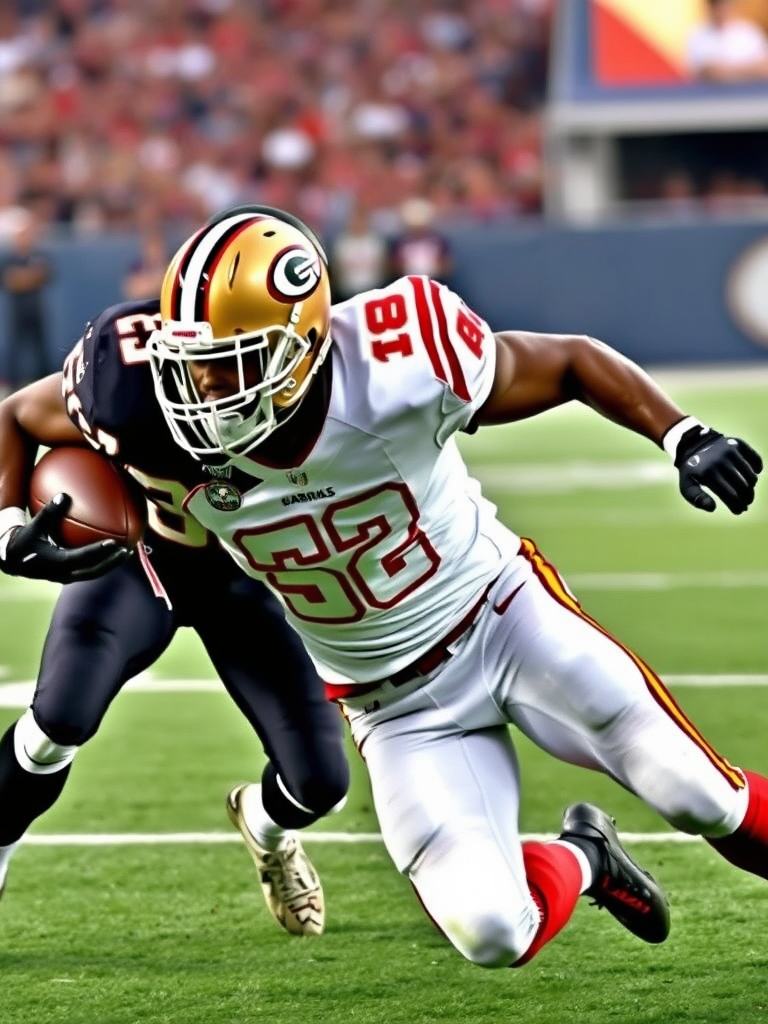
Key points
Elite pass rushing requires technical skill, film study to anticipate plays, and a dominant mindset to physically and mentally overwhelm opponents every down.
Key takeaway
Max Crosby's detailed breakdown reveals that elite edge rushing is a blend of relentless physicality, strategic mental warfare, and profound technical craft. Success hinges on studying opponents to exploit tells—like a lineman's stance or a receiver's footwork—and manipulating their expectations with a diverse arsenal of moves. The mindset is non-negotiable: a fusion of supreme confidence ("I'm the biggest dog on the field") and deep respect for the competition. Ultimately, impact is measured beyond sacks, encompassing forced fumbles, tackles for loss, and game-changing plays on special teams, all driven by the conviction to influence every single snap.
I feel like I got the best motor in the league. My engine is like a Ferrari, Bugatti, Chiron. You want to close out a game, you call on Max Crosby. One of my favorite plays ever was against Derek Henry. We worked on it all week. I knew it was coming. I ran 100 miles an hour right through his face. He's a 250 lb tailback. You feel that hit through your whole body. You celebrate, then wake up the next day sore. As an offensive guy, when you see your lineman get rocked like that, you know you're in trouble. You've got to get the ball out quick.
I've sacked many quarterbacks: Lamar Jackson, Joe Burrow, Justin Herbert. But the quarterback I've gotten down the most is Patrick Mahomes. Playing against a tackle like Jawan Taylor, he jumps the snap better than anybody. It throws receivers off. All the best tackles are getting off early. I have wars with him. We have conversations on the field. It's respect. We talk the craft. If he gets me, I say good job. He digs his hand in the ground, tries to wiggle free. But I set him up. I was setting up outside and then got him with the inside move for the sack.
I talk to Pat Mahomes a lot during games. We have mutual respect. But I always toe the line. I'm always trying to see how far I can push him. There are times on TV you see me punching him after the play. He'll say, "Come on, bro. Don't push me." That's the beauty. We've been playing against each other for years. I'm the biggest dog on the field. I don't give a damn. You're Patrick Mahomes. I'm Max Crosby. I'm trying to kill you. But after the game, I'm talking to his kids, hugging his wife. It's respect.
My goal lining up is to beat my man and create doubt every single play. It's the first play of the game. I might come off and just double swipe him so he has doubt. I beat him the first play. Even if it has nothing to do with the play, he didn't block me. So next time he comes off, he's not going to fire as hard. Now he's got a little doubt. On third down, he's thinking: can he speed rush? Swipe? Power? Spin inside? Counter? Run a game with the tackle? If I'm going to swipe, I want it to look exactly like I'm running power. I start the same. I'm right under your chin. He's going to lunge. I make it look the same, hit my third step, and I'm gone. Take the shoulder away and shoot your shot. That's what it comes down to.
Reading the offense is key. If I see a tight end like Mark Andrews going inside, I see his body structure. I start to raise up because I know I have free access. It's just me and the tackle. Typically, the tight end is chipping. If he takes off, it's an early one-on-one. Say less. I crashed across the line for a sack. But sometimes you overthink it. You anticipate the chip and it doesn't come. You stand up, which is not good. You should be going regardless. That's the toughest thing. But if you have that second gear, you just have to go.
My rookie year breakout was against the Bengals. Up to that point I had two and a half sacks. That game I had four. I did a speed move, double arm bar, accelerated to the quarterback, and knocked the ball out from behind. That forced fumble was my official "I made it" moment. I won Player of the Week. You have to consistently show it wasn't luck. You make the players look back.
Another big play was a safety against the Patriots on third and 15. I used a swipe, beat the chip, beat the tackle. You can see my eyes in the tape. I'm lit up. I knew I had him. The tackle was just a speed bump. I was on the sideline right before that play telling my D-line, "I'm about to end this." I was calling game. And we got the safety.
A pivotal play was a forced fumble against the Colts in my rookie year, week four. Leading up to that game, I was at my lowest mentally. We got murdered by Minnesota in week three. I played the worst game of my career. I felt defeated. But I didn't quit. Right before the game, our third-down edge rusher went down. I played every snap. I got that forced fumble, had a bunch of batted balls, pressures, TFLs. I was everywhere. I've never not started a game since that moment. That play was the beginning of everything.
Run defense is just as important as the pass rush. You have to impact the pass and the run with the same energy. A tackle for loss on a run play is like a sack. If you get them in third and 12, now they're predictable. They can only pass or run a screen. You're making them play one-handed.
My first career sack was against the Bears' Charles Leno Jr., a good, highly paid tackle. I used a power move into a swipe, arm over. You get them to commit, embrace, and then leave them. That picture is still up in my office.
Creativity matters. Against the Rams, we had a call where I was head-up on the tackle in a max pressure. My job was to run straight down the line. I hate wasting a rush. So I spiced it up. I found the eyes of the quarterback, Matthew Stafford, and batted the ball on third down. My teammate, Adam Butler, thought he was going to intercept it. He dropped to his knees after I tipped it. We laughed about that in the film room for days.
Special teams are crucial too. I blocked two field goals against Denver in the last game of my second year. We beat them by one point. Ironically, their special teams coach is now our coach. When we hired him, I told him, "I got your field goal team." I told him his guys were leaning too much. If their eyes are on the ground, they can't hit me. If they get lazy, I find the opportunity. That game was a big moment, finishing the year with a bang in the victory formation.
Frequently Asked Questions
Qany questions?
Please read the article carefully. If you have any questions, please contact [email protected].
Audio synthesized by Entity-Echo AI Agent