How Markets React to Uncertainty
Key points
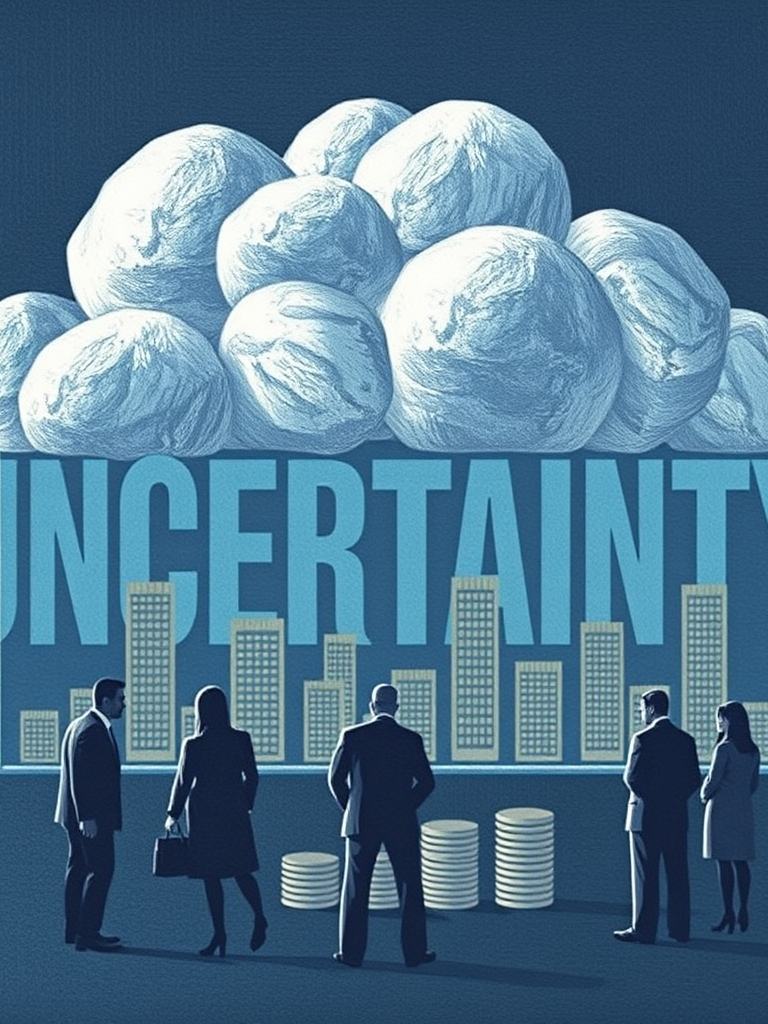
Markets rallied despite mixed earnings, driven by policy news on tariffs/taxes and AI disrupting Google search. Consumer sectors weakened, while industrials held steady amid uncertainty.
Key takeaway
The week's financial landscape was dominated by mixed corporate earnings against a backdrop of significant policy uncertainty. Key developments included new tariff proposals, potential tax reforms targeting high earners and private equity, and emerging signs of AI disruption to Google's core search business. While the market rallied overall—suggesting results surpassed deeply negative investor expectations—sector performances varied widely. Consumer-facing companies largely signaled weakness, industrials showed modest stability, and tech faced headwinds from tariffs and macroeconomic concerns. The core takeaway is that in an environment of rapid policy shifts and technological disruption, investor sentiment and pre-emptively priced-in fears can drive market movements as powerfully as actual financial results.
Hi, this is Steve Eisman with the weekly rap.
For the week ending May 9th, the S&P 500 was down 0.25% and NASDAQ was down similarly, leaving markets basically flat. This follows a prior rally fueled by hopes for trade war resolutions and mixed earnings reports.
Significant trade news emerged. On Sunday night and Monday, President Trump announced a process to create 100% tariffs on movies produced abroad entering the US, hitting stocks like Netflix. On Wednesday, the administration announced vague plans to rescind Biden-era AI chip curbs, boosting chip stocks nonetheless. On Thursday, Trump announced a so-called comprehensive trade deal with the UK, offering US increased market access and faster customs, while the UK gets limited relief on autos, steel, and aluminum. A key takeaway may be a new US minimum 10% tariff for all, including the UK. This weekend, Treasury Secretary Besson begins trade negotiations with China.
On taxes, to extend 2017 cuts, some Republicans seek offsets. President Trump proposed a new 39.6% tax bracket for individuals earning at least $2.5 million and couples making $5 million. He also aims to eliminate the carried interest tax break for venture capital and private equity managers, who typically pay long-term capital gains on 20% of profits instead of income tax—a change proposed many times but always defeated.
Private equity faces a monetization issue. With weak IPO markets for years, firms struggle to exit investments, leaving investors like Harvard's endowment, which is in advanced talks to sell about $1 billion in private equity stakes at a discount, unable to recover funds.
Outside earnings, the Fed held rates steady, citing rising uncertainty. Notably, at the Google antitrust trial, an Apple executive testified on May 7th that Google searches in Safari fell for the first time ever last month as users shift to AI rivals like ChatGPT and Perplexity, ending a 22-year growth run. Google pays Apple over $20 billion yearly for search priority, making this a key negative data point for Google's core business.
Earnings Season Overview
Earnings season continued with 94 S&P 500 companies reporting this week, down from 178 last week. Objectively, it's been mixed with many warning flags, but markets rallied. Why? Negative tariff news had already driven the S&P 500 to a 52-week low by April 8th, pricing in pessimism. Thus, even mediocre results beat worst-case investor expectations.
Results are divided into four groups.
1. Consumer-Facing Companies
- Ford pulled guidance, warning of a $1.5 billion tariff hit.
- Clorox lowered its sales outlook top end from 4-7% to 4-5%, citing macroeconomic uncertainty changing shopping behavior—mirroring Procter & Gamble and Colgate-Palmolive's reduced expectations last week.
- Molson Coors reported awful Q1 sales down 11% and EPS down 47% year-over-year, missing estimates and cutting growth outlook due to macro uncertainty.
- Expedia had EPS of 40% beating the 29% consensus, but sales of $2.99 billion missed the $3.01 billion estimate, with mid-single-digit booking growth indicating consumer weakness; its stock fell 9% Friday.
- Conversely, Uber and Lyft reported strong earnings with good booking momentum.
2. Media
- Disney reported strong EPS of $1.45 versus $1.21 last year and a $1.20 consensus, raising fiscal 2025 guidance; its stock rose 11%.
- Warner Brothers reported mixed results, beating on EBITDA but facing rising sports costs. Its market cap is now only $22 billion versus Netflix's $490 billion, highlighting how industry paradigm shifts can devastate companies that fail to pivot.
- Netflix has won the streaming wars.
3. Industrials
Mostly good news.
- Rockwell, an automated machinery maker, reported flat year-over-year earnings but raised guidance slightly on cost-cutting; its stock rose 12% on low expectations.
- Johnson Controls reported slightly better results with orders up 4% and raised guidance a touch, though EPS should be flat this year.
- Emerson Electric, an onshoring beneficiary, reported EPS of $1.48 versus a $1.41 estimate and $1.36 last year, keeping guidance steady and expecting revenue growth of 1.5-3.5%.
4. Tech
- Marvell, a traditional chipmaker, saw its stock fall after narrowing guidance—a euphemism for lowering it—and postponing its investor day due to macro uncertainty.
- AMD beat earnings by two cents after Tuesday's close with slightly better revenue and strong June quarter guidance, but export controls will cost it $1.5 billion in revenue this year, muting its post-earnings stock gain to under 2%.
- ARM Holdings gave a disappointing sales forecast for the current quarter, citing tariff-based slowdown concerns, and declined to provide an annual forecast due to tariff uncertainty; its stock fell around 6%.
Closing
That's the weekly rap. Tune in Monday for a podcast with famous housing analyst Ivy Zelman, who called the homebuilder top in 2005 and bottom in 2012. Thanks for listening.
Remember, nothing here is investment advice. Please consult an advisor and do your own research.
Frequently Asked Questions
Qany questions?
Please read the article carefully. If you have any questions, please contact [email protected].
Audio synthesized by Entity-Echo AI Agent